Building the future of tax and accounting
Role
Product DesignerTimeline
May – September 2025Team
Solo DesignerSoftware
Figma, Posthog, Rive, JitterOverview
The AI platform for world-class tax, audit, and CPA teams
Accordance is a professional tax and accounting AI researcher. It integrates with your existing stack, you ask it any question, attach your filings or knowledge sources, and it drafts research, analysis, and client-ready material grounded in real tax law and public filings. Corporate tax teams at companies like Figma and Samsung use it to analyze 10-Ks and 10-Qs, respond to IRS notices, and compare treatments across jurisdictions.
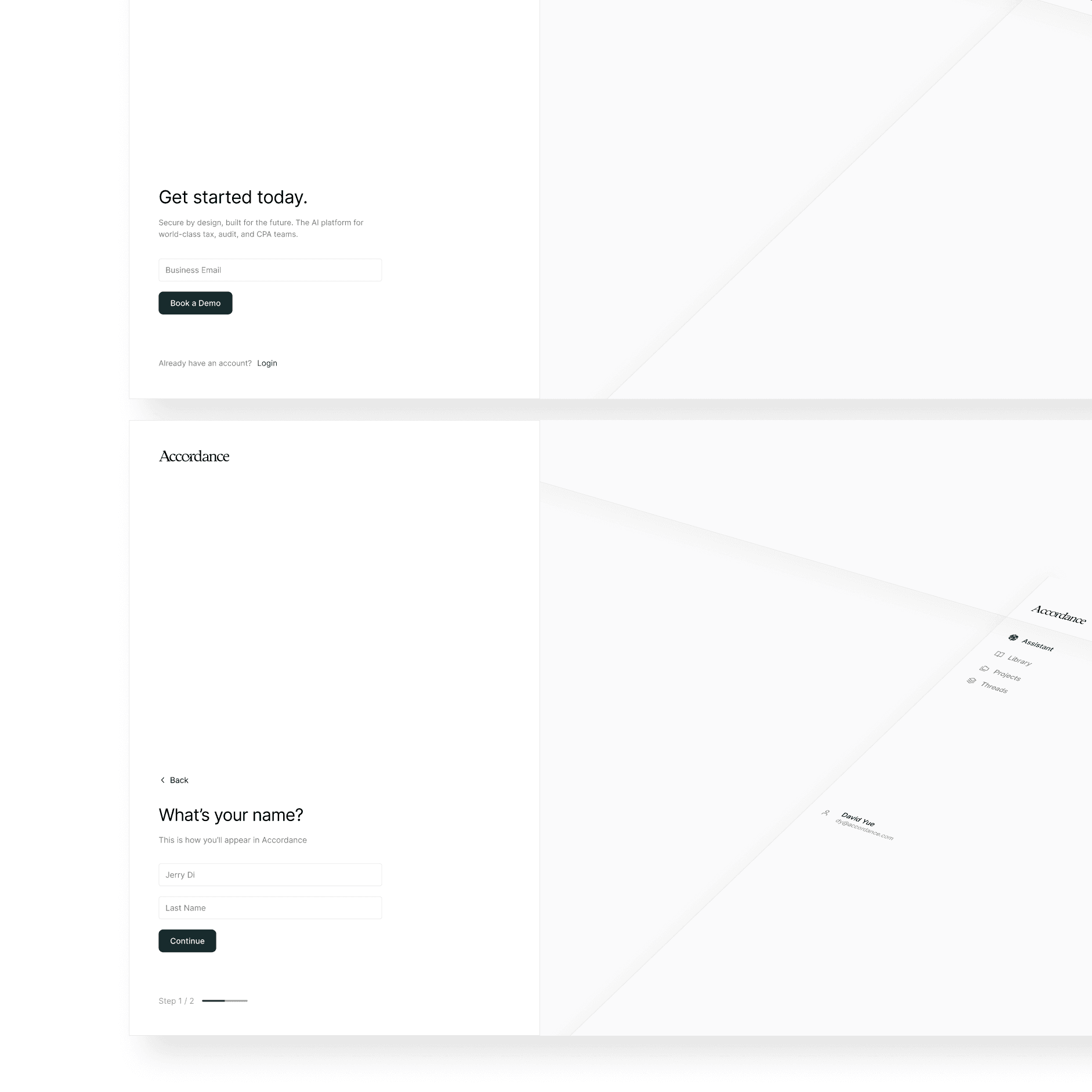
I joined Accordance as a contractor on the product team, then moved to San Francisco for the summer to take a full-time product and design role. In practice I was the first design hire: I led key features end-to-end and redesigned the entire product frontend, marketing site, and brand. This case study focuses on the work that mattered most, shipping source citations that tax teams could actually trust, and rebuilding the product's visual and interaction foundation to match the seriousness of the customers using it.
The Problem
In tax, an answer without a source is worthless
Tax and accounting work is adversarial by nature. Every position a CPA takes has to be defensible to a partner, a client, and eventually the IRS. That makes generic LLM output a liability, not a feature: a confident answer with no traceable authority behind it is something a professional cannot put their name on. If Accordance couldn't show where an answer came from — the specific IRS release, the exact section of the U.S. Code, the line in the client's own uploaded filing — it would stay a curiosity instead of becoming part of a real workflow. At the same time, the product itself didn't yet look or feel like software a Fortune 500 tax team would trust with sensitive filings. The frontend was inconsistent, the brand was thin, and core surfaces, onboarding, the research thread, the source library, hadn't been designed as a coherent system. For a company selling "secure by design, built for the future," the interface needed to carry that promise before a single query was run.
Research and Validation
70+ session breakdowns and corporate interviews
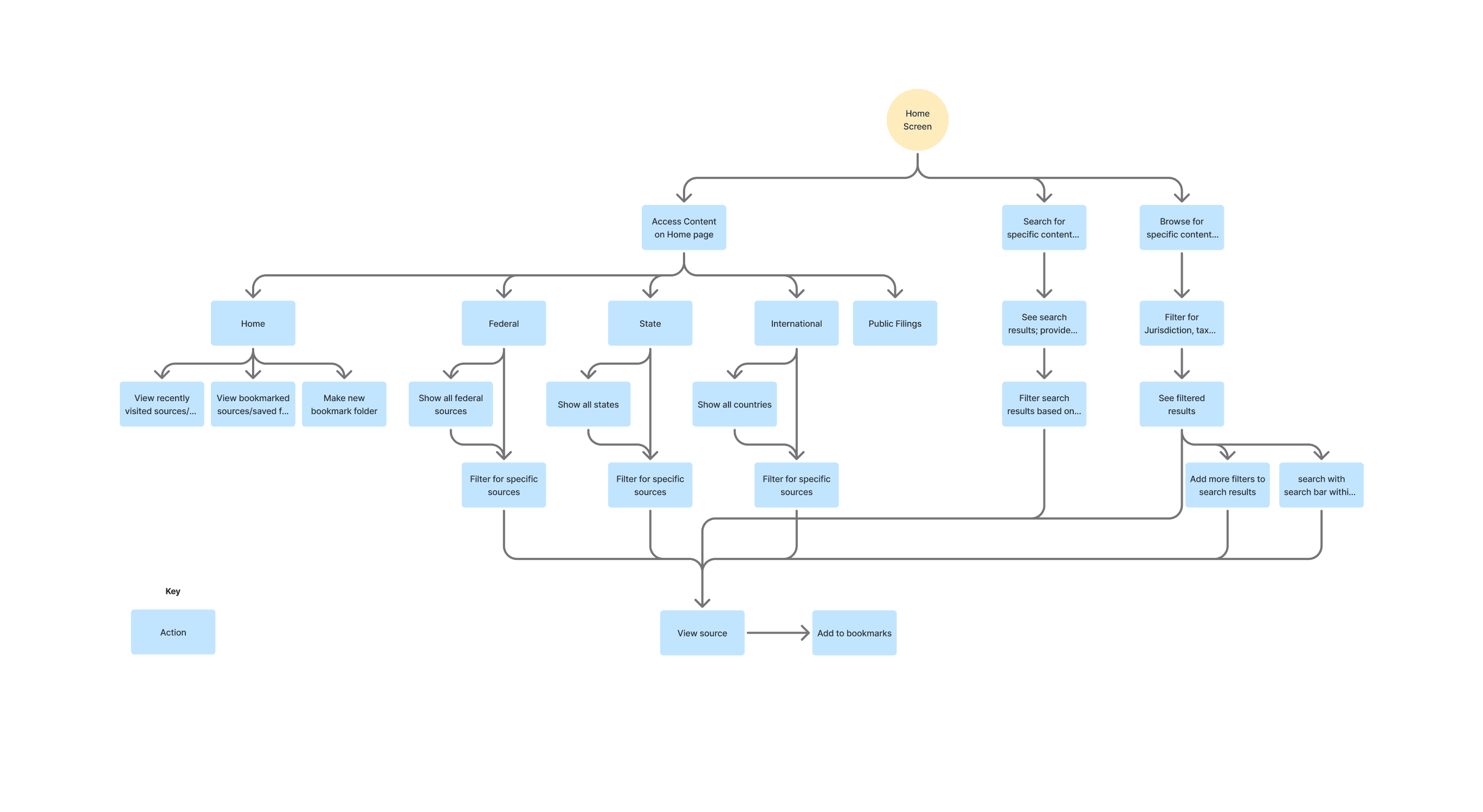
To direct feature ideation and product strategy, I grounded decisions in how people actually used the product rather than how we assumed they did. I ran 70+ PostHog session breakdowns, watching where real users hesitated, re-ran queries, or abandoned a thread. Alongside that, I interviewed 12 corporate clients, the tax and accounting professionals evaluating and using Accordance day to day. Two things came through clearly and consistently: First, trust was the gating factor. Users didn't just want a good answer; they wanted to verify it. They repeatedly checked, doubted, and looked for the citation before acting on anything — and when they couldn't trace a claim, they discarded the whole response. Citations weren't a nice-to-have; they were the difference between a demo and a tool. Second, professionals treat their research as a living body of sources. They wanted to browse authority by jurisdiction (federal, state, international, public filings), search within it, and bookmark what they'd rely on again, the same way they already work across their existing reference tools.
What I shipped: part 1
Source citations built into every answer
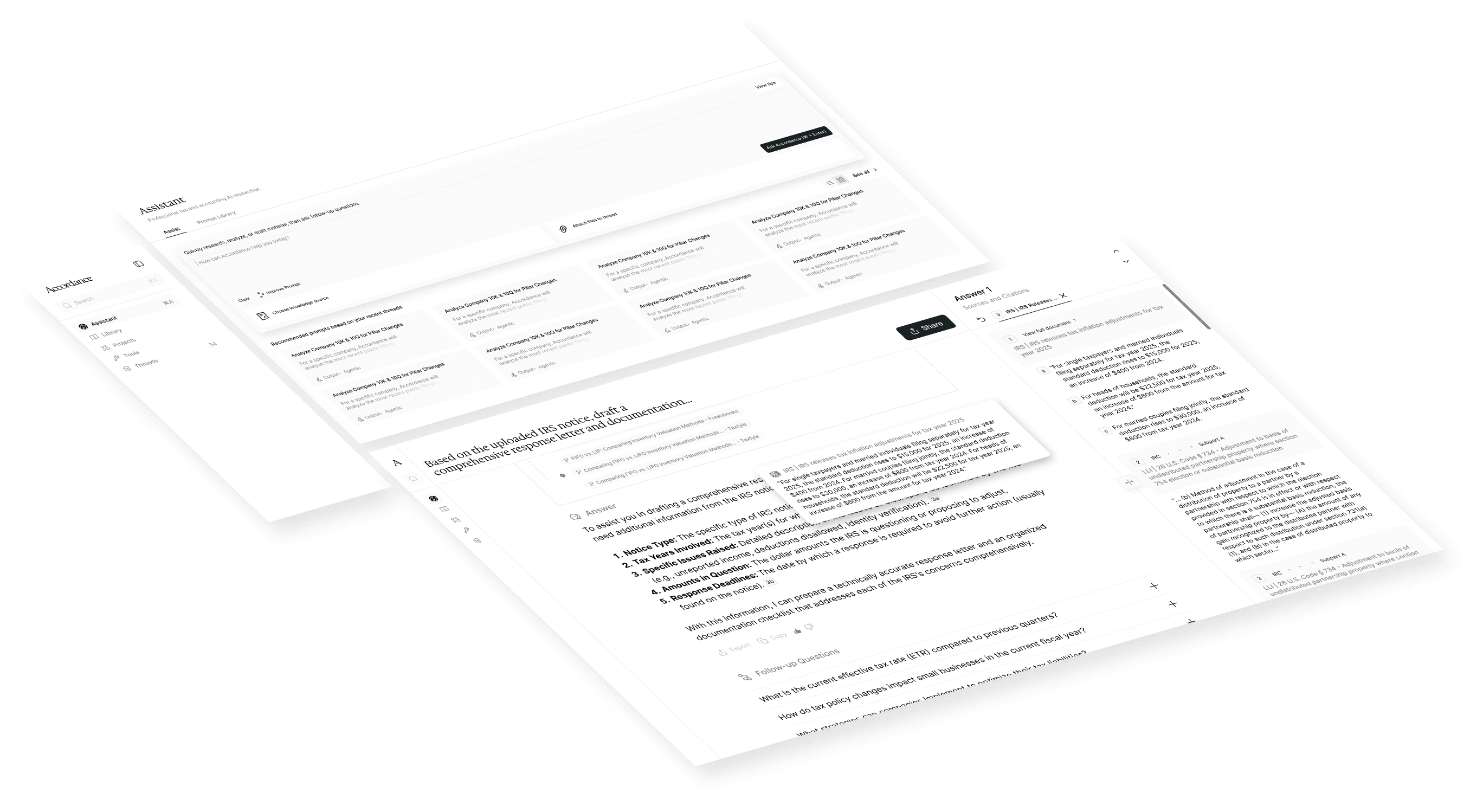
I proposed, designed, and deployed the source citation system in collaboration with the engineering and product teams. It became the feature that turned answers into defensible work product — and it was used across 7,000+ recent queries by teams including Figma and Samsung. The design threads citations through the entire answer instead of dumping links at the end: Inline references. Individual claims carry numbered citation markers ([1], [2], [3a]) right where the assertion is made, so a reader can point to the exact authority behind a specific sentence. A dedicated sources panel. Every thread has a companion panel that separates Sources from Files. Sources expand to show the specific supporting passages, an IRS inflation-adjustment release, a section of 26 U.S. Code, a company's own investor filing — with links out to the original. Client files as first-class citations. Uploaded documents (a client's .xlsx filings, for example) are cited the same way authoritative law is, so answers ground themselves in both public authority and the customer's own data.
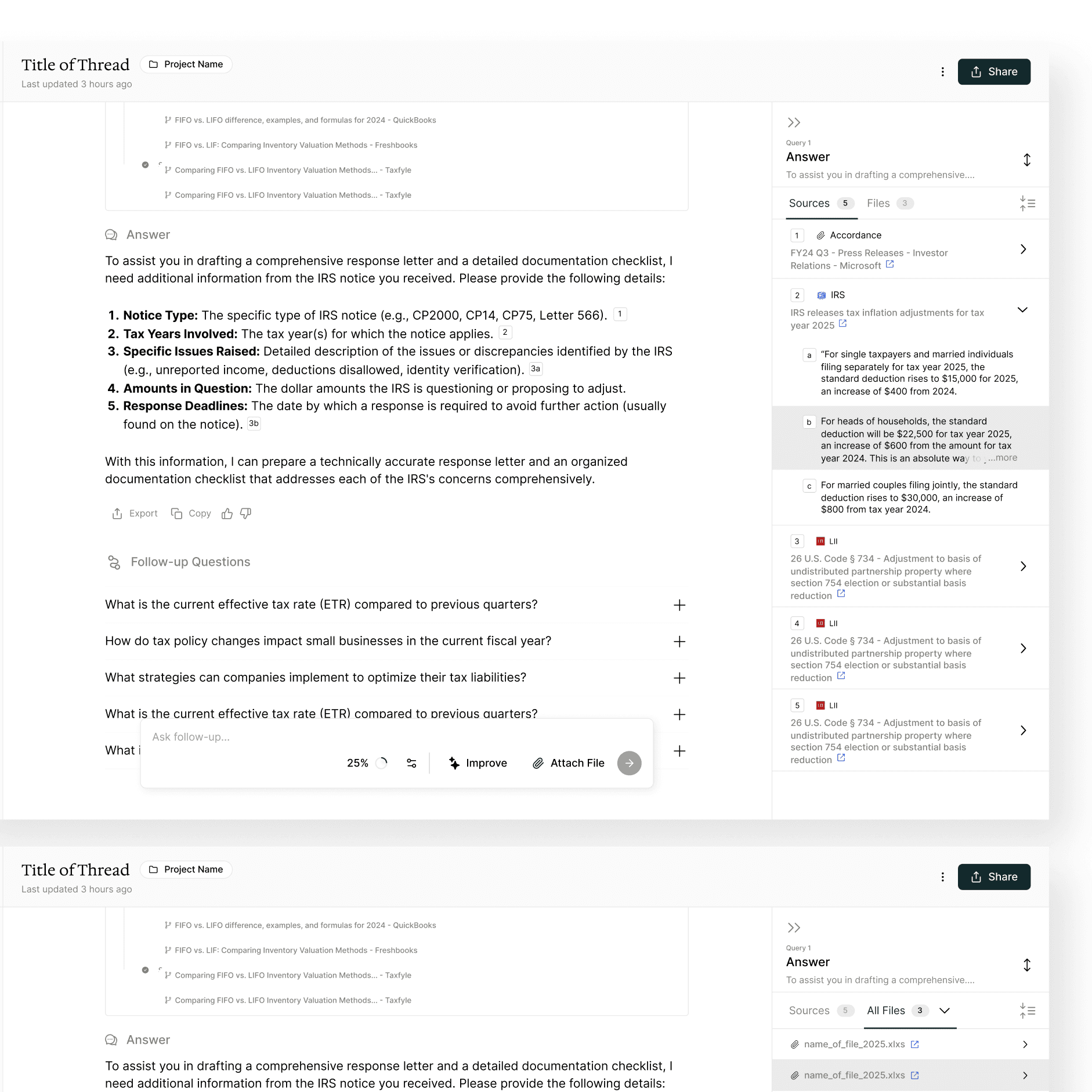
The result closed the trust gap the research surfaced: a user no longer has to decide whether to believe the answer. They can open the source, read the passage, and take the position with their name on it.
What I shipped: part 2
Full product redesign
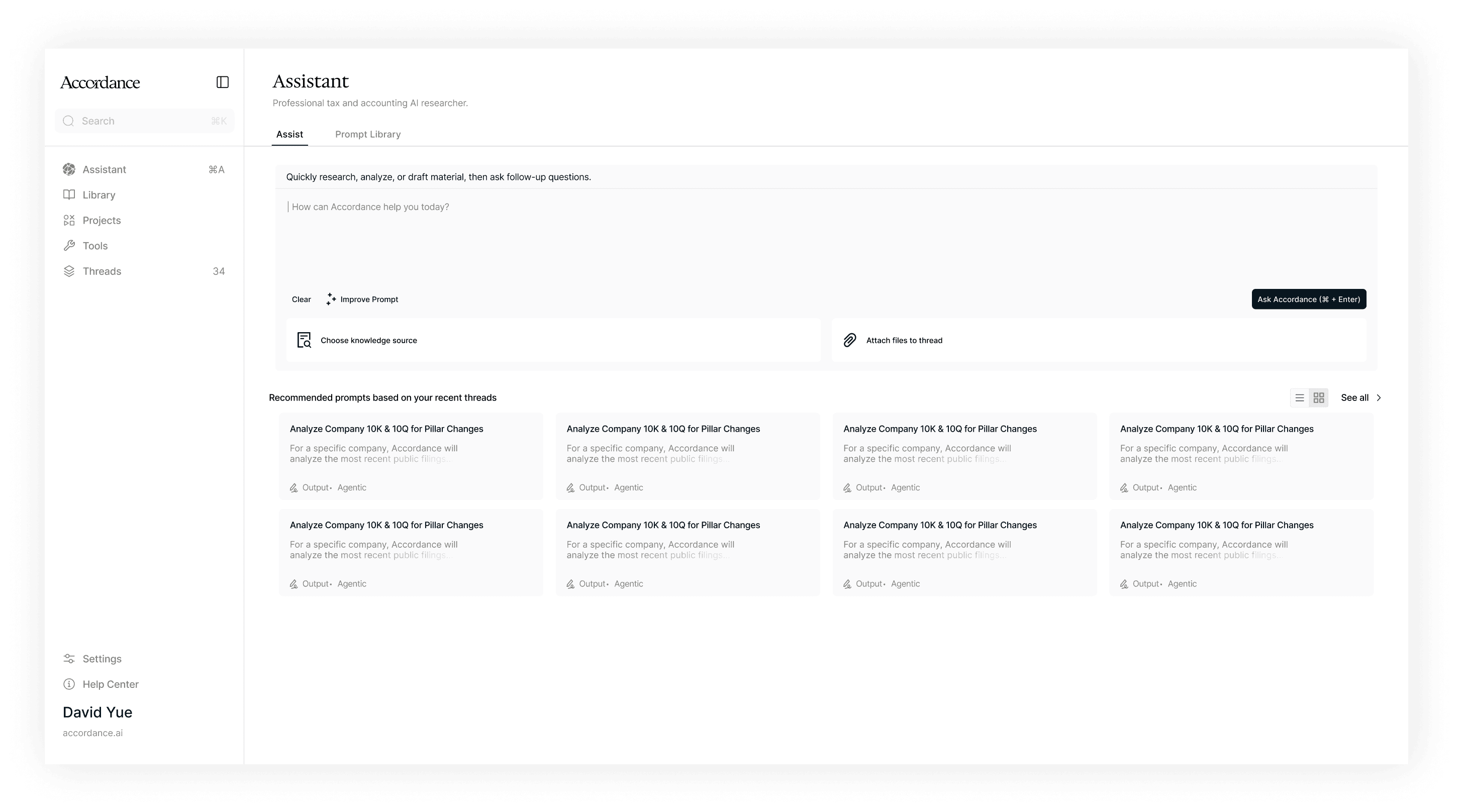
Beyond the flagship feature, I redesigned the entire product frontend, reworking the design system the rest of the work was built on. A coherent product surface. I redesigned the core surfaces into one system: the Assistant home with its single ask box and agentic prompt recommendations, the research thread, and the source Library. Consistent typography, spacing, and a restrained, authoritative palette make the product read as serious infrastructure rather than a generic chat wrapper.
What I shipped: part 3
Marketing site, brand, and motion
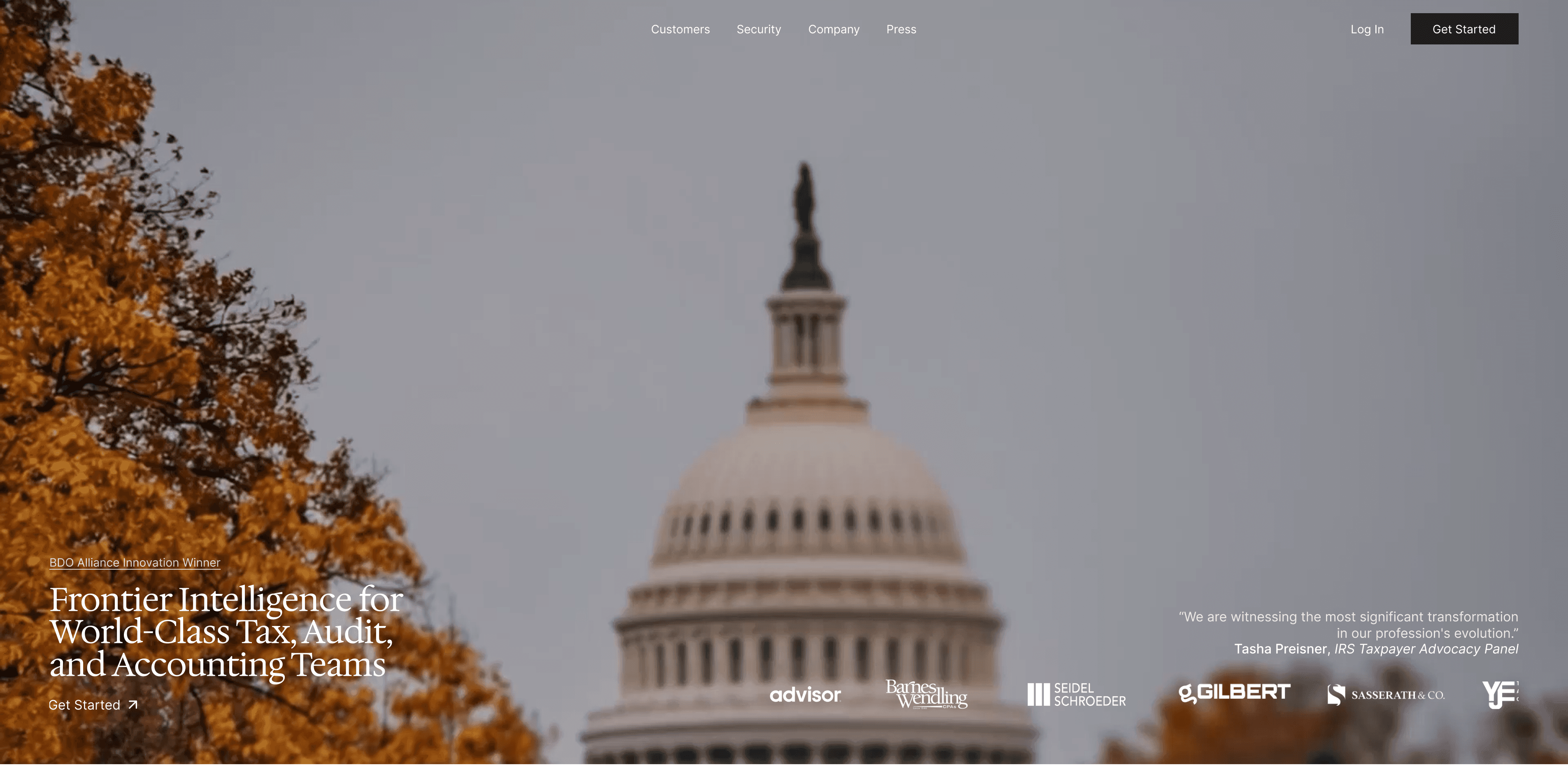
I also designed the entire marketing website end-to-end, and used it as the place to define what the Accordance brand actually looks and feels like. Brand and mood research. There wasn't an established visual language to inherit, so I started with brand and mood exploration: studying how serious, trusted institutions present themselves and searching for a direction that felt natural for a tax and accounting audience rather than another generic AI-startup look. That exploration is what led to the final identity — a classical serif wordmark, an authoritative palette, and imagery like the Capitol dome that signals legislation, authority, and permanence. The hero. The work converged on a single marketing hero: "Frontier Intelligence for World-Class Tax, Audit, and Accounting Teams," anchored by customer logos (Figma, Tripadvisor, and others) and social proof. It sets the tone the moment a buyer lands, credible, institutional, and clearly built for professionals.
Learning motion from scratch. The site is carried by a set of custom animations I built despite having no prior animation experience, teaching myself timeline-based motion (staggered reveals, cursor and search-box choreography, an "Ask Accordance" product demo) to make the page feel alive instead of static. Motion became part of the brand rather than decoration on top of it.
Conclusion
What I learned at Accordance
In a professional tool, trust is a design problem, not a model problem. The most valuable thing I shipped wasn't a smarter answer, it was making the existing answer verifiable. Watching users doubt and re-check in 70+ sessions reframed citations from a feature into the core of the product's value. Research earns its keep only when it changes what you build. The PostHog breakdowns and 12 client interviews didn't just produce quotes; they produced a direction, traceable answers and navigable sources, that I could point every design decision back to. Being the first design hire means the system is the deliverable. Redesigning the product, site, and brand wasn't three separate projects. It was establishing one visual and interaction language that let a small team ship features that felt like they belonged to something enterprise-ready. Owning the whole surface meant learning new crafts on the job. Defining the brand from a blank page and teaching myself motion design to build the hero animations pushed me well past interface design. The constraint of "there's no one else to do it" turned into the reason the product, site, and brand ended up speaking with one voice.